The most beautiful tiles can fail completely if the wrong adhesive is used. Cracked tiles, hollow spots, tiles falling off walls — these are almost always adhesive problems, not tile problems. This guide gives you the complete picture on tile adhesives for Indian construction conditions.
Types of Tile Adhesive
- 1Standard cementitious adhesive (Type 1): For standard floor and wall tiles in dry conditions
- 2Heavy-duty adhesive (Type 2): For large-format tiles, external walls, and high-stress areas
- 3Flexible adhesive: For surfaces prone to slight movement — wooden subfloors, underfloor heating
- 4Rapid-set adhesive: Sets in 2–3 hours instead of 24 — ideal for commercial projects with tight timelines
- 5Epoxy adhesive: Two-component system for extreme durability in industrial or chemical environments
Itone Ceramic Adhesive Range
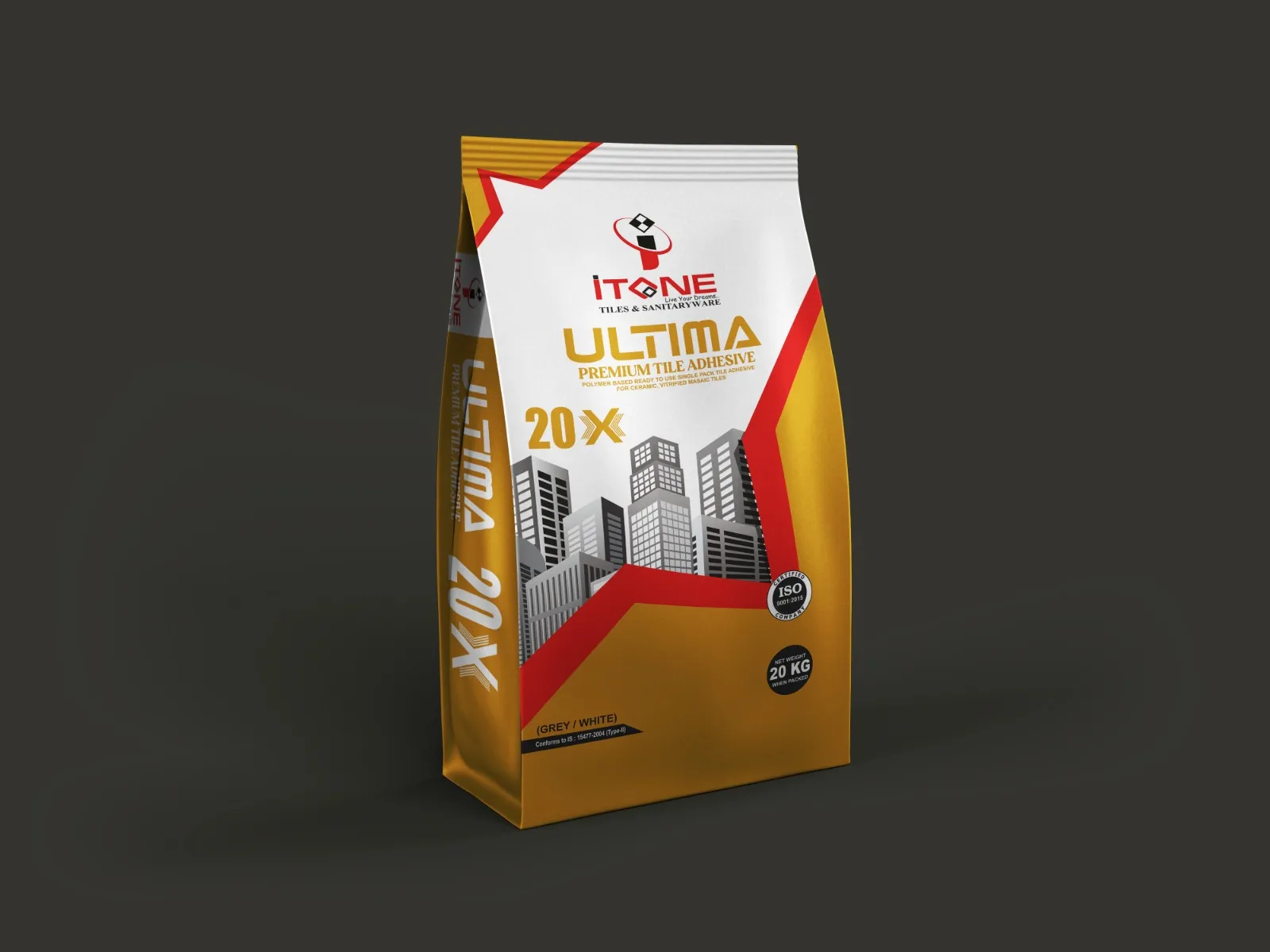
- 1Itone Tile Adhesive Ultima (Grey): Heavy-duty formula for large tiles, vertical cladding, outdoor use
- 2Itone Tile Adhesive Prima (White): Standard formula for regular floor and wall tiles
- 3Both available in 20 KG moisture-resistant bags
- 4Suitable for all Indian climate conditions — from humid coastal areas to dry interiors
When to Use Which Adhesive
- 1Bathroom walls (60×30 cm tiles): Standard white adhesive
- 2Kitchen floor (60×60 cm tiles): Heavy-duty grey adhesive
- 3Exterior wall cladding: Heavy-duty adhesive + waterproof additive
- 4Large format tiles (60×120 cm+): Always use heavy-duty adhesive with back-buttering
- 5Swimming pool tiles: Specialised pool adhesive only
Mixing Ratios and Application
- 1Typical ratio: 1 part adhesive powder to 0.45–0.5 parts clean water
- 2Mix until smooth, lump-free consistency (like thick peanut butter)
- 3Rest for 5 minutes, remix before use — this 'slakes' the powder
- 4Use a notched trowel (6mm for small tiles, 10mm for large format) for consistent coverage
- 5Aim for 80–90% coverage on the back of each tile — check by pressing and pulling up a tile
- 6Pot life: Use mixed adhesive within 3–4 hours
Common Mistakes to Avoid
- 1Too much water: Weakens bond strength significantly — follow the ratio precisely
- 2Not back-buttering large tiles: Large tiles (60×60+ cm) need adhesive on both tile and substrate
- 3Working in direct sunlight/heat: Adhesive dries too fast — work in shade or cool hours
- 4Inadequate surface preparation: Substrate must be clean, dry, and dust-free
- 5Not allowing proper curing time: Walk on floor tiles after 24 hours minimum, grout after 48 hours
Trade Secret: For large outdoor tile installations in India's summer heat, use a damp cloth over newly laid tiles for the first 24 hours. This slows the curing process and dramatically improves bond strength.
Quality adhesive is a small cost relative to the total project value — but it's the difference between tiles that last 30 years and tiles that fail in 3. Itone Ceramic's Ultima and Prima adhesives are formulated specifically for Indian climate conditions and construction standards. Ask for them at your nearest Itone dealer.
Itone Ceramic Design Team
Our in-house design and product team shares expert knowledge from Itone Ceramic's 8+ years in the tile business — product selection, installation, design, and dealer support.