If you've ever walked into a tile showroom and felt overwhelmed by terms like GVT, PGVT, double charge, and vitrified — you're not alone. These are industry classifications that describe how tiles are made and what they're best suited for. This guide demystifies them all.
Ceramic Tiles — The Classic Choice
Ceramic tiles are made from natural clay fired at high temperatures. They're the most affordable and widely used tile type in India.
- 1Water absorption: 3–10% (higher than vitrified tiles)
- 2Best for: wall applications, low-traffic areas, dry zones
- 3Not recommended for: heavy traffic floors, outdoor areas, wet zones without proper sealing
- 4Price range: Most budget-friendly option
- 5Finish: Available in matte, gloss, and satin
Vitrified Tiles — The Workhorse
Vitrified tiles are made by fusing silica and clay at extremely high temperatures (1200°C+), creating an almost glass-like, non-porous surface. They're stronger, denser, and more resistant to moisture than ceramic tiles.
- 1Water absorption: Less than 0.5%
- 2Best for: High-traffic floors, living areas, halls, commercial spaces
- 3Durability: Extremely high — rated for heavy foot traffic
- 4Price: Mid to premium range
- 5Types: Full body, soluble salt, double charge, GVT/PGVT
GVT — Glazed Vitrified Tiles
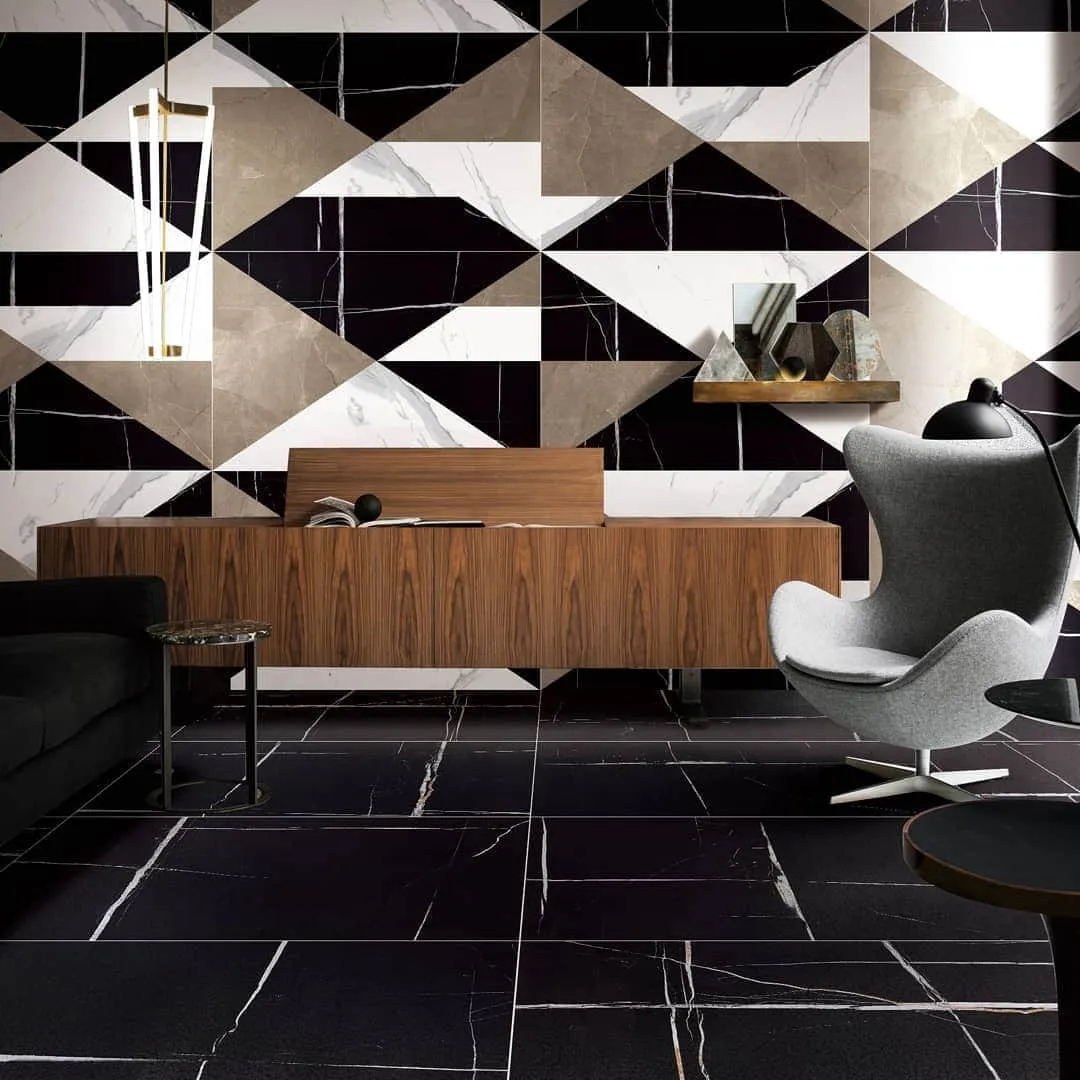
GVT tiles have a vitrified base with a glaze layer on top that allows for high-definition digital printing. This means virtually unlimited design possibilities — wood looks, marble looks, geometric patterns, and custom prints.
- 1Best for: Living rooms, bedrooms, feature walls, any area where aesthetics matter most
- 2Surface: The glaze can be matte, glossy, satin, or textured
- 3Design variety: The widest range of any tile type
- 4Durability: Very good, but the glaze layer can show wear in extremely high-traffic areas over many years
PGVT — Polished Glazed Vitrified Tiles
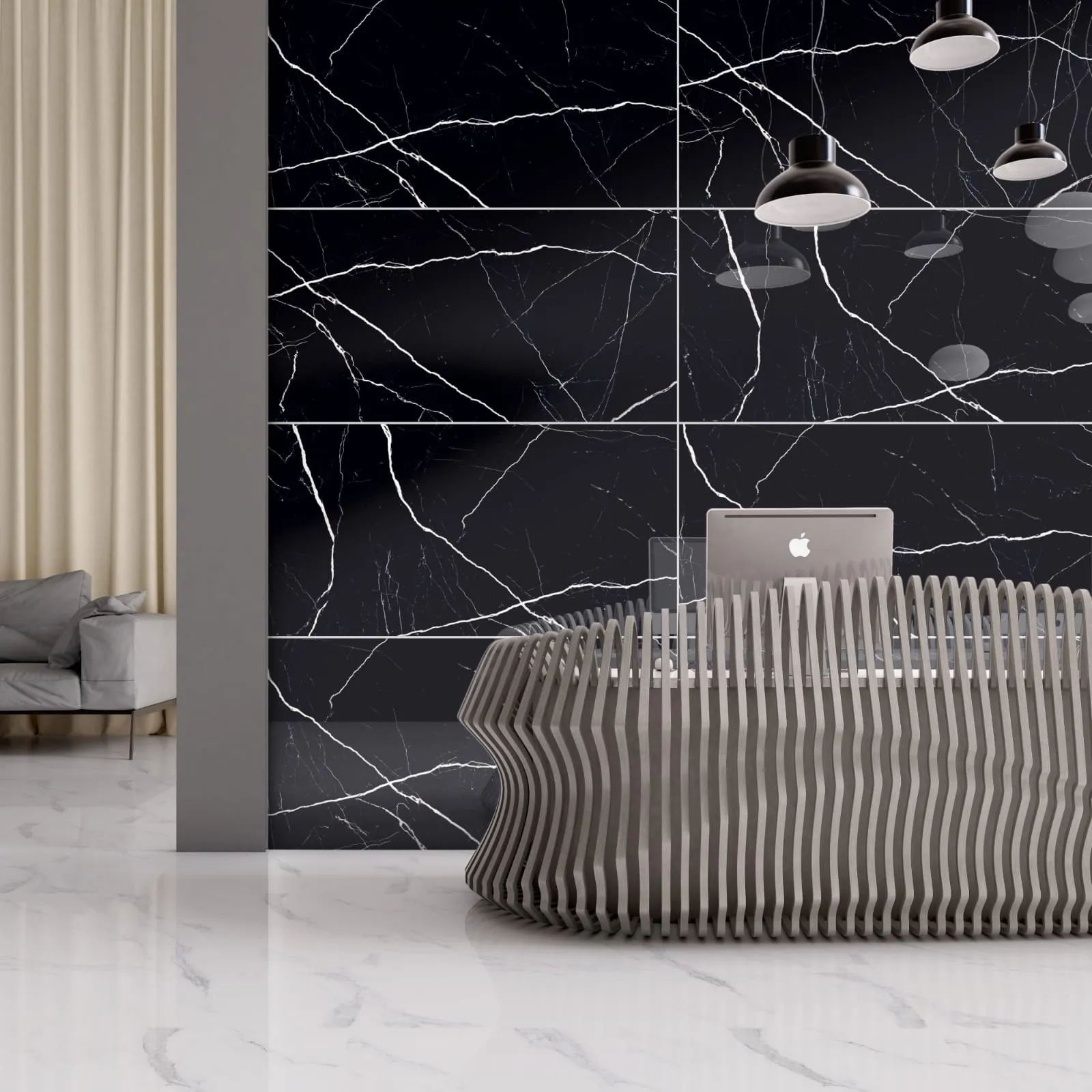
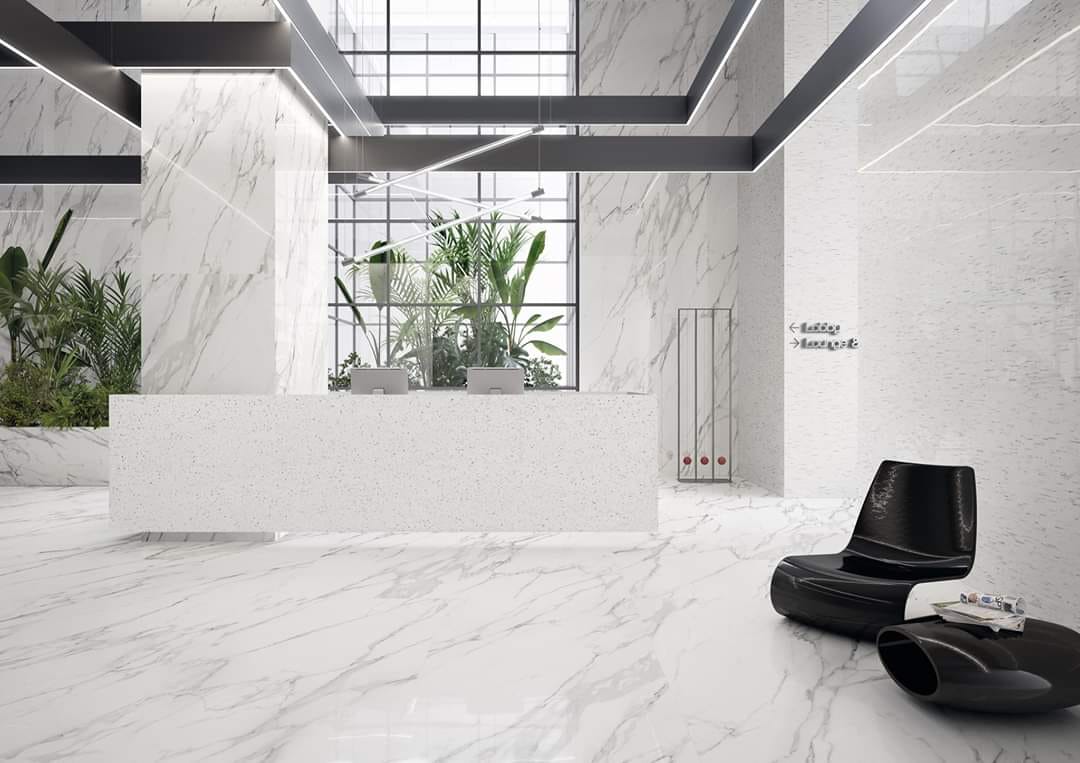
PGVT tiles are GVT tiles that have been polished to a mirror-like finish after glazing. They offer the richest visual depth and the most luxurious look of any tile type.
- 1Best for: Master bedrooms, formal living rooms, hotel lobbies, luxury residential projects
- 2Finish: High-gloss mirror polish
- 3Consideration: Shows dust and footprints more easily — requires regular wiping
- 4Visual effect: Creates depth and reflectivity that makes spaces feel larger
Double Charge Tiles
Double charge tiles are vitrified tiles where pigment is pressed through the full depth of the tile, not just the surface. The design goes 3–4mm deep, making them extremely scratch and wear-resistant.
- 1Best for: Very high-traffic commercial and residential floors
- 2Durability: The highest of any tile type — the pattern won't wear away
- 3Design: Limited compared to GVT — mostly abstract or salt-and-pepper looks
- 4Finish: Typically polished
- 5Common sizes: 60×60 cm, 80×80 cm
Which Tile Should You Choose?
- 1Kitchen floor: Vitrified or double charge (anti-skid finish)
- 2Bathroom floor: Anti-skid ceramic or vitrified with COF > 0.6
- 3Living room: Large-format GVT or PGVT
- 4Bedroom: GVT in matte wood-look or warm tone
- 5Outdoor/parking: Parking tiles or heavy-duty vitrified
- 6Wall tiles: Ceramic or GVT (walls don't need the strength of floor-grade tiles)
- 7Commercial spaces: Double charge or heavy-duty vitrified
Industry Tip: Always check the PEI (Porcelain Enamel Institute) rating on tiles. PEI 1-2 = wall use only, PEI 3 = light residential floors, PEI 4 = all residential + light commercial, PEI 5 = heavy commercial. Ask your dealer for the PEI rating of the specific tile you're considering.
Now that you understand the full tile spectrum, you can shop with confidence. Our trained dealers across 10+ states can help you select the right tile type for your specific project requirements. Visit an Itone Ceramic showroom or contact us for personalised advice.
Itone Ceramic Design Team
Our in-house design and product team shares expert knowledge from Itone Ceramic's 8+ years in the tile business — product selection, installation, design, and dealer support.